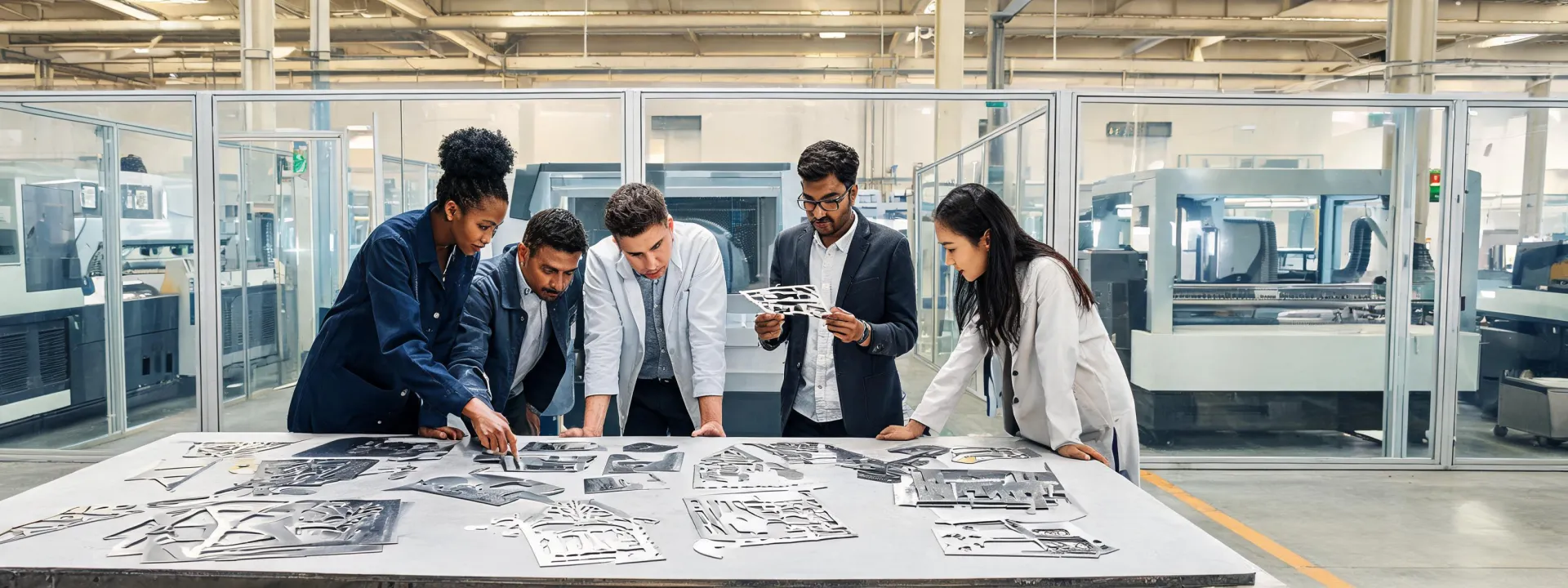
Bodor application and production team workspace
About Bodor

People, records, and handoffs behind a Bodor laser project

The physical machine is one part of a production decision. Application interpretation, configuration control, site preparation, operator readiness, and service escalation determine whether the investment can be evaluated and supported.

Working intent

Translate factory requirements without hiding the conditions

MISSION

Make the application review specific enough to test

Bodor project conversations should connect the drawing revision, material identity, thickness range, target throughput, edge or weld criteria, downstream operations, and available utilities. When those inputs are missing, the responsible step is to identify the uncertainty. A machine series, source class, cutting head, bed format, automation option, extraction package, and service scope can then be discussed against the same record.

This approach avoids presenting brochure settings as guaranteed plant results. Actual outcomes change with material chemistry, flatness, surface condition, nozzle state, focus, gas purity, programming strategy, ambient conditions, and maintenance.
VISION

Leave each handoff clearer than it arrived

A useful handoff tells the next team what was assumed, what was observed, what remains open, and who owns the decision. Sales records commercial boundaries; application engineers define test conditions; site teams verify readiness; trainers work on the delivered configuration; service teams inherit the machine record and agreed escalation path.

Regional capabilities and contractual terms differ. Buyers should confirm field coverage, language, parts strategy, acceptance protocol, warranty scope, software terms, and safety responsibilities in writing before the order is released.

Project culture

Four behaviors that protect production decisions

01

State the Boundary

Separate a configured capability from a conditional estimate, a sample observation, and a guaranteed acceptance value.

02

Record the Setup

Link process observations to material, thickness, gas, nozzle, focus, speed, power, geometry, and machine state.

03

Invite the Operator

Include the people responsible for nesting, material handling, maintenance, quality release, and downstream work.

04

Close the Handoff

Assign unresolved utilities, guarding, training, spare parts, documentation, and escalation actions before production start.

Work with the project team

Bring your part, not just a power number

Share the production context and the uncertainties that matter. A structured brief gives commercial, application, and service teams a common starting point.